A squeal or squeak over bumps usually means a suspension part is moving dry, worn, or out of position when the car’s weight shifts. Drivers tend to hear it over speed bumps, driveway entrances, rough side streets, or broken pavement at low speeds. The car may still feel stable enough, so the sound gets pushed aside and treated like a minor annoyance.
It usually is not minor for very long.
Why The Noise Shows Up Only Over Bumps
A bump forces the suspension to compress and rebound in a very specific way. That movement loads bushings, links, mounts, spring seats, and other support parts all at once. If one of those pieces has dried out, cracked, or started rubbing where it should not, the sound will show up right there and then disappear once the car is back on level pavement.
That is why this kind of noise is useful. It points toward chassis movement, not engine speed or tire rotation. A squeak that appears only when the suspension travels is already narrowing the problem down.
Dry Bushings And Rubber Parts Are Frequent Causes
Rubber bushings are designed to cushion movement and prevent suspension parts from making direct contact. As they age, they harden, crack, and lose the flexibility that keeps everything quiet. Once that happens, the suspension starts talking every time the car moves through a bump.
Control arm bushings, sway bar bushings, and strut mounts are common sources. Spring insulators and upper mounts deserve attention too, especially if the noise seems to come from high in one corner of the vehicle. In many cases, the squeak starts before the handling gets noticeably worse, which is why an inspection at this stage usually saves money.
Sway Bar Parts And Strut Mounts Make A Lot Of Noise
Sway bar links and sway bar bushings are some of the biggest trouble spots for bump-related squeaks. They move constantly over uneven pavement, and once the rubber or joints begin wearing, they become noisy fast. The sound often shows up on smaller bumps before it becomes obvious over larger ones.
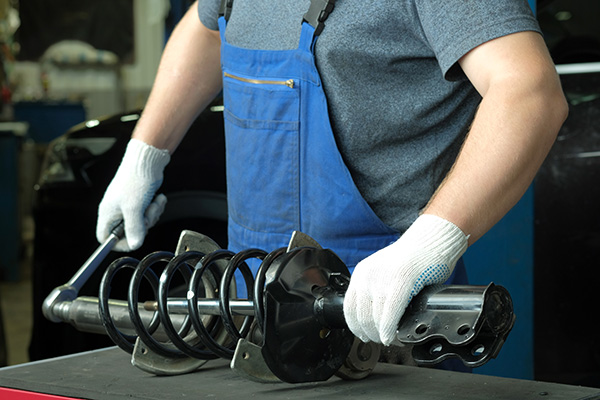
Strut mounts create a different kind of squeak. They carry the load from the top of the suspension, so when the rubber in them begins wearing out, you may hear noise from one front corner every time the body rises and falls. This kind of wear is easy to miss because the car may still drive fairly well in normal traffic.
Sometimes The Source Is Nearby, Not Deep In The Suspension
Not every bump squeak comes from the main suspension parts. Brake hardware, splash shields, body mounts, and worn plastic retainers can create a similar sound when the chassis flexes. Exhaust hangers and loose underbody pieces will do the same thing, especially on older vehicles.
That is why noise diagnosis takes more than a quick guess. The sound may seem like it is coming from the front strut area when the real source is slightly behind it or lower in the chassis. A proper inspection should examine the entire area that moves when the car goes over a bump.
Clues That Help Narrow It Down
A few patterns usually help point the inspection in the right direction:
- A squeak from one corner often points to a bushing, mount, or link on that side
- A noise over every speed bump usually pushes sway bar parts higher on the list
- A squeak that is louder in the morning often points to dry rubber parts
- A sound that gets worse over driveway entrances can suggest body flex or upper mount wear
These clues do not confirm the exact repair, though they do make the problem easier to track down. The more repeatable the sound is, the easier it is to pinpoint.
Why Waiting Usually Makes The Repair Bigger
A squeak over bumps is often the first warning stage. The same worn part that squeaks today may start clunking later, and once looseness develops, tire wear and steering feel often begin changing too. What could have been a focused suspension repair turns into a longer list as nearby parts begin to take extra stress.
This is one of those complaints that should be brought up during regular maintenance instead of waiting for a more dramatic symptom. Suspension wear rarely gets cheaper by waiting. It just gets louder, looser, and harder on the rest of the front end.
What A Proper Inspection Should Cover
A real inspection should check sway bar bushings, sway bar links, control arm bushings, strut mounts, spring seats, brake hardware, and nearby underbody attachments. The goal is not just to make the sound go away. It is to find out what is being worn and keep the same issue from returning a few weeks later.
Once the source is confirmed, the repair is usually much more straightforward than drivers expect. The important part is catching it while it is still just a squeak and not a bigger handling problem.
Get Suspension Repair In Palo Alto, CA, With Palo Alto Shell
If your car squeals or squeaks every time you drive over a bump, Palo Alto Shell in Palo Alto, CA, can inspect the suspension and chassis, find the source, and fix it before that small noise turns into a larger front-end repair.
Bring it in while the sound is still an early warning and easier to correct.